Showing posts with label National Parks. Show all posts

Sunday, March 30, 2014

401 and Done

When I was a kid I was bowled over by the national parks my parents took my three sisters and me to.  We didn't go to that many, but they amazed me.  Redwoods, Grand Canyon and Carlsbad Caverns are three that come to mind.  We got a National Geographic book, America's Wonderlands, and I avidly pored through it.  I dreamed of one day going to every national park in America.  There were about 40 of them in those days.

Today's entry is about an interesting fellow who has accomplished something I admire very much.  By visiting the Carter G. Woodson Home National Historic Site in Washington, D.C. this year,     Chris Calvert has been not only to all 49 national parks, but to all 401 sites and units in the national park system!  To read a more complete story, National Parks, the quarterly magazine of the National Parks Conservation Association, has an article about him in ts Spring 2014 issue.  Appropriately, it's titled "401 and Done."

 
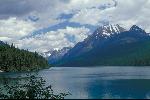
Carter's quest began 33 years ago,     when he was 17.  His parents took    him to Olympic National Park in     Washington state. He remembers  being overwhelmed by the majesty of snow-capped crags looming over old growth forest and flowered  meadows and saying, "If this is what the national parks
are about, I have   to see all of them."
       
Carter graduated from law school, but instead of becoming a "big-shot lawyer" remains a clerk in the office.  That's because he is "unwilling to sacrifice that much of his life to a job."  As his partner  Jeff Splitsoser says, Carter feels "The most precious thing we have is time.  All the money in the world     cannot buy you back another second of it.  His passion is seeing parks--not filing an application or a    brief." For living life as he wishes in pursuit of his passion and dream this entry salutes Chris Calvert.                       

Sunday, July 7, 2013

Loving the National Parks

My oldest daughter visited us for the weekend, and yesterday we spent the day at Sequoia National Park.  I was reminded again how great our national parks are, and for so many reasons.  To start with, they preserve the rare and the beautiful.  The Giant Forest area of Sequoia, which includes the General Sherman tree, the largest living thing on earth, is about an hour and a half drive from home.  Without the national park idea, these trees would all be gone, cut down for lumber.  As it is, we have only three percent of the redwood forests that existed 150 years ago.  They would be extinct had they not been placed in a federal preserve as urged by John Muir and guarded by the "buffalo soldiers" beginning in 1890.


The parks preserve natural ecosystems, giving us baseline examples by which to measure the health of the natural world.  They give us welcome respites from the noise and grit of the modern world, and that in turn seems to bring out the best in the human spirit.  As Jeanette and I climbed Moro Rock or hiked the Alta Trail we came across people from many different countries.  We heard conversation in many tongues, both identifiable and mysterious, and  the common denominators were happiness and friendliness.  People were universally in a good mood, smiling and laughing, faces gazing upward to the canopy in wonder or to the sculpted horizon in awe.  Brotherhood reigned as folks shared their impressions, asked directions or shared sights and pictures with complete strangers in pidgin or gestures.  The atmosphere at a national park gives me hope that maybe someday international problems can be surmounted and we can all get along.  There is something about unspoiled nature that brings out the positive in people.

Photo: With daughter Jeanette today at Sequoia  National Park

Thursday, July 12, 2012

Glacier National Park Trip


Joan and I just returned yesterday from a wonderful 10-day vacation to Glacier National Park in Montana.  The "Crown of the Continent" is a magnificent combination of clear skies, spectacular alpine scenery, unspoiled nature at its best and the chance to see plenty of wildlife in its natural setting. 

I've wanted to go ever since as a small child my mother told of her trip before I was born through the American Northwest, including Glacier.  My desire to go has received added impetus in recent years as I've read reports detailing the loss of many of the park's signature glaciers and the shrinkage of all the rest.  I wanted to see them before they are gone.

I was not disappointed!  We spent the first five days on the Western side of the park, staying at Lake McDonald, a 10-mile long lake carved by glaciers in the last Ice Age.  One of our activities was to take a boat tour of the lake.  We also did a 2-hour horseback trail ride (in the rain!) and some hiking.

Lake McDonald 3
Lake McDonald

The best hike there was to Avalanche Lake.  The ranger-led activity ended at an awe-inspiring cirque, a natural mountain amphitheater carved by glaciers with four beautiful waterfalls plunging from the heights.  We also spotted a moose on this trek.

Avalanche Lake
Avalanche Lake
The best drive was over the incredible Going to the Sun Road, a 52-mile engineering marvel that took 11 years to build (1921-1932).  It's the only road over the Continental Divide linking the Western and Eastern halves of the Park.  We drove it once ourselves and then again as passengers in one of Glacier's famous "Red Bus" tours in one of their vintage 1936 vehicles.  Not to worry, they've been fully refurbished and run on propane gas.  The road is so precipitous I didn't really get to look at the scenery as much as I wanted the first time through!  Waterfalls were everywhere, complementing breathtaking overlooks.  The snow still lay deep at the top of Logan Pass, and we saw many mountain goats.


Red Bus at Logan Pass

We spent the last five days on the Eastern side of the Park at the Many Glacier Hotel.  We made a side trip to Two Medicine Valley and hiked to Running Eagle Falls, and another to adjacent Waterton Lakes National Park in Canada, both worthwhile excursions.  While at Many Glacier we went on a four-hour horse ride and got to see a moose coming toward us on the trail and a mother bear and her cub up close feeding in a meadow nearby.  Fortunately, they paid us no mind!  We did see a grizzly too, but from long range through a ranger's telescope.


Black Bear and Cub

  
The view right out the backdoor of the grand old hotel included Grinnel Peak and several snowfields and glaciers.  It is the jumping-off point for several terrific hiking trails.  We also enjoyed music in the evenings from Montana bard David Walburn and Native American poet laureate Jack Gladstone of the Blackfeet tribe. 
Many Glacier Hotel, Swiftcurrent Lake, Grinnel Peak
All in all, ten days of no news, telephone, television or email was refreshing and good for the serenity of the soul.  And as an added benefit, all the hiking and my every-other day morning running at high altitude made today's workout at home seem like a piece of cake.  This is a trip we will always treasure.

Monday, June 25, 2012

Seeing Glacier Before It's Too Late

At the end of the week we'll be leaving on a trip I've been looking forward to for many years.  My mother often spoke glowingly of a trip she took as a young woman, before I was born and even before she met my father.  Back in the late 1940s she and a couple of friends toured throughout the West to many of the National Parks and Monuments.  That was quite an undertaking for three women at that time, long before the interstate freeway system.  One of the places she spoke of most fondly was Glacier National Park.   

For some time I've wanted to see the park in the northern Rockies known as the "Crown of the Continent," and this will finally be the year.  I've been particularly eager of late because the namesake glaciers are melting fast.  They will probably be gone by 2030, say the climate scientists.  It's all part of an ongoing human-caused catastrophe that's underway and gaining momentum.

In this quarter's National Parks magazine, a publication of the National Parks Conservation Association, the grim facts are presented.  The toll will likely claim, by 2100, roughly 40 percent of global plant and animal species, "including 21 percent of mammals, 37 percent of freshwater fish and 70 percent of plants."  Global sea level is up 2 inches, but over 4 inches on the U.S. East Coast.  As the Greenland and West Antarctic ice sheets continue to melt, the ocean should rise by over four feet by century's end.  That would inundate the Everglades, a third of Olympic National Park's coastline and a number of island nations.

So we'll enjoy Lake McDonald and traverse Going to the Sun Road.  We'll ride pack horses and hike around Many Glacier.  We'll skip across the border one day and cruise Waterton Lake on the Canadian side.  We'll see moose, elk and maybe grizzlies.  At least the pictures will last! 

Tuesday, May 29, 2012

The High Sierra in Late Spring

Yesterday my wife and I got back from a whirlwind trip over Tioga Pass in Yosemite National Park.  We left Sunday at noon from Visalia, taking the Wawona Road just to the beginning of iconic Yosemite Valley.  From there, instead of contesting with the Memorial Day Weekend throngs, we peeled off to the north and enjoyed the relative solitude and truly wild Sierra experience of Tioga Road.  With some stops for views, short hikes and lunch we pulled into the town of Lee Vining at the eastern base of the pass around 6:00 P.M.

I do so love the mountains.  The crystalline sky is so deep and richly blue it's almost purple.  Rushing torrents of melt water leap over cliff faces, race down boulder-strewn creek beds or meander through awakening meadows, greening now at 7,000 feet while those at 9,000 are still tawny.  Lakes such as Tenaya are so clear you can see bottom.   Snow lingers in the high scarps where pikas are emerging from their dens, ever watchful for hungry raptors circling above.  Even the firs are hunched and gnarled from their interminable struggle with wind and chill at Tioga Pass's 9945 foot summit.


In the middle elevations a riot of ferns and vines spring into ephemeral verdancy, where a keen and patient eye may spot a bear gorging on berries.  As the season warms both flora and fauna will creep upward.  Higher on the craggy slopes of the Grand Canyon of the Tuolumne a decent pair of binoculars may bring some mountain goats into focus.  Rarely you might spy a mountain lion crouched furtively in the granite or edging ever closer to its intended prey.


To me there is something primally compelling about these untamed expanses.  You can sense it in the people you meet who have come from all over the world to revel in creation as when it first existed.  There was the Indian family with laughing children scaling a boulder at an overlook, or the smiling young Japanese couple who took our picture at Tuolumne Meadow, or the animated group of six travelers from France recounting their adventures of the day before over breakfast at a little place in Lee Vining.      

If its national parks are not "America's Best Idea," as Ken Burns has said, they are certainly one of them.  I definitely feel spiritually refreshed amid such wonder, and grateful these places of peace have been set aside for preservation, not only so their natural inhabitants can live according to their natures, but that we humans may also reclaim some of our own. 


Tuesday, October 18, 2011

Good Friends and Big Trees


It's been awhile since I posted.  I've been extremely busy with papers to grade and a visit from my good friends Tom and Jeff.  I also want to apologize to Ms. Cain, who posted a comment on my last blog entry on exercise.  I was trying to approve and publish the comment, but seem instead to have deleted it!  I always look forward to comments on my musings, so if any of you dear readers want to chime in please feel welcome.  I'll try not to delete the next one!

My topic today is friendship, occasioned by the wonderful visit of my friends Tom and Jeff.  These guys have been special friends since our days at Claremont McKenna College, which we all attended from 1972 to 1976.  It is humbling to think our acquaintance now goes back nearly 39 years.  Tom and I were room mates for several semesters.  Jeff is in charge of rural development loans for the US Department of Agriculture in Oregon.  Tom is a developmental economics professor at Michigan State University.  He spends a lot of time in Asia working on the economics of food distribution.  I teach history at College of the Sequoias.  All of us wanted to go into fields where we felt we could contribute to society and help people.   

My friends came for a three-day weekend, flying in to the San Francisco Bay Area Friday morning and arriving here about noon.  They left early before dawn on Monday.  We had plenty of activities, most of it centered around nearby Sequoia National Park.  But of course the best thing about it was the camaraderie--the catching up, sharing ideas, views and advice.  It's uncanny how with very good friends it's easy to pick right up where you left off, filling the same roles in a group.  Tom even mentioned right away how it seems people's basic personality is formed early and persists throughout life.  Indeed it seems so.


The picture above shows the three of us taking a break on our hike along the Sugar Pine Trail at Sequoia.  That's me on the left, Jeff in the middle and Tom on the right.  We went about five hours at 6500 feet, a good workout.  I was able to go to the top of Moro Rock and get a gorgeous view of the high Sierras from there, as you can see from this closeup of Jeff.  Yes, the first snowfall of the year had taken place a couple of days before.  Our first quick visit up Friday afternoon had been shrouded in fog and cloud, but by the time we

 took this shot on Sunday it was clear and sunny.  The temperature was a comfortable (for hiking) 55 degrees.  At one point on the trail deep  in the woods we found ourselves about 20 yards from a bear!  Fortunately the critter was in a copse of bushes busily gnawing on something and paid us no mind. 

Saturday we visited Crystal Cave in the park, another first for me.  Tom had never been in a cave.  The hour-long tour was over almost before we knew it--a sure sign of time well spent.  The cave was noteworthy for its still-growing formations and its clear running water inside.  The guide was a fascinating young man.  He struck up a conversation with us after the tour about how to approach finding a college that fits his interests and goals.

We didn't spend a lot of time reminiscing about bygone days.  All of us, in our late fifties, are still focused on the present and future.  There was talk about handling job pressures and personal relations, and Jeff now has a grandchild to dote on.  Tom is on the verge of a major career advancement and was also encouraging me to branch out.  It felt so comfortable to be able to share intimacies so freely; such friends are one of the great blessings of life.

If you've never seen a giant sequoia, they are truly awesome. Here is a shot at the entrance to Circle  


Meadow in the Giant Forest Area of Sequoia.  One sign compared the size of these trees to a human, saying they are about the same relative size to us as we are to an ant.  The biggest are up to 275 feet tall and comprise 40,000 cubic feet of lumber, the largest living things ever on planet earth.  The Coast Redwoods along California's northwest shore are taller but much thinner and have less volume.  These giants can live up to 3,000 years!  

It was a great weekend.  Fresh air, the joys of good friends, stimulating conversation and humor, taking in the wonders of nature, and treating ourselves to Reimers ice cream on the way down after a good long walk reduced the relationship of life and happiness down to its essentials.  These are the true things of life to savor.


Friday, May 22, 2009

Most Beautiful Place in the World

Everyone has their own preference for natural beauty. Some like the stark desert while others love seascapes. I'm partial to mountain scenery. One of the bonuses of moving to Central California ten years ago is proximity to the Sierra Nevada. My wife and I will be spending the weekend in what is to me the most beautiful spot on Earth, Yosemite.

El Capitan, Glacier Point, Yosemite Falls, Half Dome. All these world famous landmarks are all in view at the same time. Late spring should see Yosemite, Bridal Veil, Nevada and all the other waterfalls at peak volume. The world's largest single exposed block of granite, El Capitan, stands sentinel over the entrance to John Muir's "heavenly valley." Fantastic glacially-scoured miles-long walls of stone hang thousands of feet over your head on all sides with a picture-perfect river and flat valley floor of meadow and forest in your foreground. The flora, the wildlife, the mountains, the roar of cascading water and the clouds of mist make this an unforgettable and awesome spectacle.

The national parks, sometimes called "America's best idea," are a treasure trove of gems. And Yosemite is my favorite of them all. If you would like to help preserve America's wonderlands and historic heritage, I'd like to recommend a membership in the National Parks Conservation Association for your consideration. You can go to their website here.