It's time for our weekly look-in at the 2016 presidential races. Big wins in New York by the two front runners, Hillary Clinton and Donald Trump, are the key development this week. The key question is whether this translates into nomination gold for them. We'll look first at the Democrats and then the Republicans.
Democrats
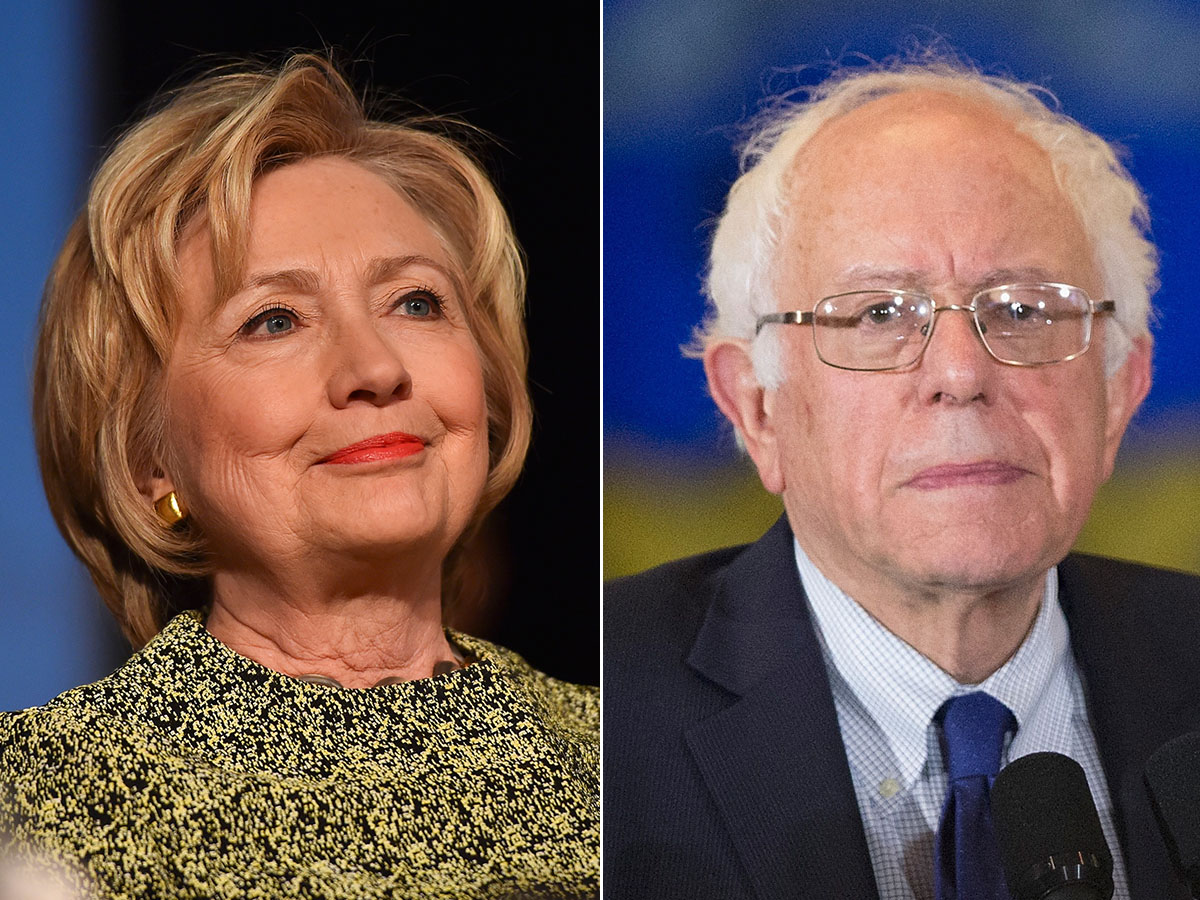
Hillary Clinton's 16-point 58 to 42 percent win over Bernie Sanders gave her a delegate edge of 139 to 106 in the Empire State. That lengthens her delegate lead by 33 in the race for the nomination. In the overall count of pledged delegates won in primaries and caucuses she now has 1428 to his 1151. There are 1472 pledged delegates left to win in the states that haven't voted yet. A total of 2026 secures the majority, so Hillary would need 598 of those, about 40.5%. Bernie would have to win 875, about 59.5%. He'd have to win the remaining contests by an average of 19 points to overtake Hillary. Is that possible?
To find out, let's look at what's coming up in next Tuesday's votes. Five Northeastern states will be in play on April 26, all holding primaries. All Democratic contests award delegates proportionally to the vote. So, does the Bern look to have a good chance to do some catching up? Well, if the polls are anything close to accurate, not so much. Pennsylvania is the big prize, 189 delegates. Hillary leads there by 16 points in the average of recent polling. Maryland offers 95 delegates, with Hillary up by 21. Connecticut has 55 and Hillary leads there by an average of 7. Then you have two small states with only one recent poll in each. Rhode Island has 24 delegates and the one survey there had Clinton up by 9. Delaware will send 21 delegates to the convention in Philadelphia, and the one poll taken there this month showed Hillary ahead by 7. If these polls are right, and most recent polling this primary season has had good accuracy, the former Secretary of State will win 219 delegates next Tuesday and the Vermont Senator will pick up 165. That means another 54 added to Clinton's lead.
So it's looking more and more that the Democratic nomination is effectively wrapped up. After those results next Tuesday, Sanders would have to win all the remaining races by an average of almost 30 points to catch up in pledged delegates. And if you add in the super delegates it's even more certain. Hillary has the support of 502 to Bernie's 38, with 172 still undeclared. With them counted into the mix Bernie would need a whopping 72 percent of all the still unchosen delegates to win at the convention. The bottom line? It's all over but the shouting. Hillary Clinton is the 2016 Democratic nominee.
Republicans
On the GOP side the main question is whether Donald Trump can clinch the nomination on the first ballot of the Cleveland convention. After taking 60 percent of the vote in his home state to 25 for John Kasich and 15 for Ted Cruz, Trump walked away with 89 delegates to Kasich's 3. He now has 845, followed by Cruz with 559, Marco Rubio, who has suspended his campaign, with 171, and Kasich with 148. Trump needs 1237 for a first-ballot convention triumph and there are 674 Republican delegates still to be awarded in the upcoming states. That means The Donald would need to get 392 of them, a little over 58 percent. Is that doable? Well, it looks like it's going to be very close one way or the other. He could just make it or could fall just short. Complicating matters are the varied and sometimes bizarre delegate selection formulas used by Republican parties in the different states.
Here's how things stand in the five April 26 Republican primaries. Pennsylvania has 71 delegates and the polls say Trump 44, Cruz 25, Kasich 24. Maryland gets 38 and the race is similar to Pennsylvania's, Trump 41, Kasich 26 and Cruz 25. Connecticut, 28 delegates, has Trump at 49, Kasich 27 and Cruz 18. Then come Rhode Island and Delaware, with only one poll each, as with the Dems. RI has 19 delegates and the one poll from February gave Trump 43 with Cruz and 10 and Kasich at 14. Rubio had 25 percent support back then. Delaware has 16 delegates and the one April poll showed a big lead for Trump: 55 to 18 for Kasich and 15 for Cruz. In terms of delegates, as near as I can figure given the different rules in play in each state, Trump stands to win 71 delegates, Cruz 12 and Kasich 18.
Then there are 54 delegates to be elected in Pennsylvania's 18 congressional districts, three per district, who are winner take all by district, but who are not bound to vote for the winning candidate of their district once they get to the convention. Talk about strange. Depending on who those delegates are and how they are selected, they could vote for anybody even if Trump wins their district. And judging from the polling there, one would expect Trump to win most of those districts. But GOP insiders do not have much love for Trump, so who knows what they might do if Trump's campaign apparatus can't insure their supporters occupy those seats. If they can, Trump would come away with 105 delegates next Tuesday to Cruz's 22 and Kasich's 28.That would leave Trump at 950 delegates, needing 287 more to get to the magic number with 539 still to be elected in the remaining states. That outcome would bring Trump's needed percentage to clinch down to 53.2%, seemingly a doable feat, especially considering he is running 9 points ahead in delegate-rich California, which awards most of its delegates to congressional district winners on a winner-take all basis. But if the insider game denies him those votes, he would need 63 percent of the rest of the unchosen delegates to win on the first ballot in Cleveland, a much taller order. The bottom line on the Republican side is that it's nip and tuck and could go either way. It should be pretty dramatic to watch.
Showing posts with label Bernie Sanders. Show all posts
Showing posts with label Bernie Sanders. Show all posts
Thursday, April 21, 2016

Friday, April 8, 2016
Can Sanders Catch Clinton?
Can Bernie Sanders catch Hillary Clinton in the race for the Democratic presidential nomination? Today's analysis points up both the difficulties and the possibilities.
The starting point is the delegate contest. At the end of the day the candidate with a majority of delegates at the convention will be nominee. No amount of hype or spin can diminish that reality. Up to now Hillary Clinton has won 1280 pledged delegates in the primaries and caucuses so far. Bernie Sanders has won 1030. There are 3964 pledged delegates to be won in all the contests. So a majority is 1983. There are 18 states and two territories still to vote, with 1661 delegates at stake. According to Democratic Party rules, they will be allotted proportionally, so that in each contest if a candidate wins 55% of the vote they will get 55% of the delegates at stake. That means Secretary Clinton still needs 703 of those 1661, or 42.3% of them. Starting with 1030, Senator Sanders needs 953 of the 1661 still out there, or 57.4%, to wind up with the majority. That means Bernie needs to win all the remaining states by an average of 15.1% to get ahead of Hillary in the pledged delegate count. That's a really tall order. His latest win, Wisconsin, was regarded as a decisive victory. Yet even there he came away with 55.8% of the 86 delegates up for grabs. That's below the percentage he needs from here on out.
And then there are the superdelegates to consider. The Democrats give convention votes to 712 nationwide party officials, such as congress members, governors, and mayors of large cities. 500 of these have committed to a candidate so far, and 469 of those have declared for Mrs. Clinton. Only 31 have come out for Bernie Sanders. So with the supers added in, that ups the convention delegate total to 4,763, with 2382 needed for a majority and the nomination. With her 469 superdelegates Hillary actually has 1749 delegate votes in hand. Adding his 31 supers, the Bern has 1061. That changes the calculation quite a bit. Clinton needs 633 more delegates to get from 1749 to 2382, and that's only 32.4% of the combination of pledged delegates and uncommitted superdelegates left. Sanders would have to get 1321 of them, or 67.6% of those still to be won. That's a real mountain, and probably outside the bounds of what is realistically achievable. In other words, by either the pledged delegates alone, or certainly with the superdelegates thrown in, Bernie's chances are a real longshot and highly improbable.
So the Sanders campaign has hit upon another strategy, and it could conceivably work. Their thinking is that if the Vermonter can continue to pull off a string of primary victories, especially in the big important states like New York, Pennsylvania and California, he can convince Clinton supers that she is fading and flip many who have said they are for Clinton over to his cause. So, what are the chances of that? Well, Sanders still has work to do. There is recent polling out in four important upcoming states. New York votes on April 19, with 247 delegates to win. (Election poll sourcing.) The last three polls there have Clinton ahead by 12, 10 and 18 points. Pennsylvania chooses 189 delegates on April 26, and the three most recent polls have Clinton ahead by 25, 22 and 6. Maryland awards 95 delegates on the same day, with Clinton up by 15 in the only recent poll taken there. California and its massive delegation of 475 delegates will be decided on June 7. The last four recent surveys there have Clinton ahead by 7, 11, 14 and 6.
The upshot is that the numbers heavily favor Hillary Clinton. Bernie Sanders, to win, has to come from behind in all these states by strong margins, strong enough to shake the majority of superdelegates so that they defect to his side. If I were handicapping odds I'd put Hillary Clinton's chances at better than 80% of being the Democratic nominee. Can Sanders win? It is not likely, but it is possible, but only if the Democratic electorate from here on out decides it wants to support him in a pretty overwhelming way.
The starting point is the delegate contest. At the end of the day the candidate with a majority of delegates at the convention will be nominee. No amount of hype or spin can diminish that reality. Up to now Hillary Clinton has won 1280 pledged delegates in the primaries and caucuses so far. Bernie Sanders has won 1030. There are 3964 pledged delegates to be won in all the contests. So a majority is 1983. There are 18 states and two territories still to vote, with 1661 delegates at stake. According to Democratic Party rules, they will be allotted proportionally, so that in each contest if a candidate wins 55% of the vote they will get 55% of the delegates at stake. That means Secretary Clinton still needs 703 of those 1661, or 42.3% of them. Starting with 1030, Senator Sanders needs 953 of the 1661 still out there, or 57.4%, to wind up with the majority. That means Bernie needs to win all the remaining states by an average of 15.1% to get ahead of Hillary in the pledged delegate count. That's a really tall order. His latest win, Wisconsin, was regarded as a decisive victory. Yet even there he came away with 55.8% of the 86 delegates up for grabs. That's below the percentage he needs from here on out.
And then there are the superdelegates to consider. The Democrats give convention votes to 712 nationwide party officials, such as congress members, governors, and mayors of large cities. 500 of these have committed to a candidate so far, and 469 of those have declared for Mrs. Clinton. Only 31 have come out for Bernie Sanders. So with the supers added in, that ups the convention delegate total to 4,763, with 2382 needed for a majority and the nomination. With her 469 superdelegates Hillary actually has 1749 delegate votes in hand. Adding his 31 supers, the Bern has 1061. That changes the calculation quite a bit. Clinton needs 633 more delegates to get from 1749 to 2382, and that's only 32.4% of the combination of pledged delegates and uncommitted superdelegates left. Sanders would have to get 1321 of them, or 67.6% of those still to be won. That's a real mountain, and probably outside the bounds of what is realistically achievable. In other words, by either the pledged delegates alone, or certainly with the superdelegates thrown in, Bernie's chances are a real longshot and highly improbable.
So the Sanders campaign has hit upon another strategy, and it could conceivably work. Their thinking is that if the Vermonter can continue to pull off a string of primary victories, especially in the big important states like New York, Pennsylvania and California, he can convince Clinton supers that she is fading and flip many who have said they are for Clinton over to his cause. So, what are the chances of that? Well, Sanders still has work to do. There is recent polling out in four important upcoming states. New York votes on April 19, with 247 delegates to win. (Election poll sourcing.) The last three polls there have Clinton ahead by 12, 10 and 18 points. Pennsylvania chooses 189 delegates on April 26, and the three most recent polls have Clinton ahead by 25, 22 and 6. Maryland awards 95 delegates on the same day, with Clinton up by 15 in the only recent poll taken there. California and its massive delegation of 475 delegates will be decided on June 7. The last four recent surveys there have Clinton ahead by 7, 11, 14 and 6.
The upshot is that the numbers heavily favor Hillary Clinton. Bernie Sanders, to win, has to come from behind in all these states by strong margins, strong enough to shake the majority of superdelegates so that they defect to his side. If I were handicapping odds I'd put Hillary Clinton's chances at better than 80% of being the Democratic nominee. Can Sanders win? It is not likely, but it is possible, but only if the Democratic electorate from here on out decides it wants to support him in a pretty overwhelming way.
Monday, March 14, 2016
March 15 Primaries: What to Look For
Five populous states rich in delegates will be up for grabs in tomorrow's March 15 primary contests. The main question to be answered in these important primaries is whether the Democratic and Republican challengers can blunt the momentum of front runners Hillary Clinton and Donald Trump in their respective races. We'll start with the Democrats first.
Democrats
Hillary Clinton starts with a 215-delegate lead among pledged delegates elected so far, 766 to 551. Among the roughly 700 superdelegates, who can vote for whomever they wish, she has been endorsed so far by 461 while only 25 have have declared they are backing Bernie Sanders. Sanders's strategy thus has to be to win states by convincing enough margins that he overcomes Clinton's pledged delegate lead and also makes superdelegates change their minds.
North Carolina has 107 delegates at stake. Polls show Clinton ahead by an average of 24 points, 57 to 33 percent. Her lead has been shrinking, so let me generously (for Bernie) project that she holds on by a narrow 52-48 margin. That would give Hillary 56 delegates and Bernie 51.
Florida has a trove of 214 delegates. Clinton is way ahead in all polls. Her average lead is 29 points, 61 percent to 32. If we give Bernie all the undecideds and call the outcome 60-40 for Hillary, she will come home with 128 delegates and he will get 86.
Ohio sends 143 delegates to the Democratic convention in Philadelphia. Polls have Clinton up by an average of 8 points, 51 to 43. Her lead has been shrinking, so let's suppose Sanders nips her at the wire and wins by an eyelash. Call it 72 delegates for the Bern, 71 for Hillary.
Illinois elects 156 Democratic delegates. Polls show a virtual dead heat, with the Secretary up by 48-46 over the Senator. Again, momentum is moving Sanders's way, so we'll project another buzzer beater win for the Vermonter: 79 delegates to 77.
Missouri chooses 71 delegates. It's another state in which polls give Clinton a narrow lead, 46-43 in this case. Once again, let's presume the challenger closes the gap and ekes out a victory, 36 delegates to 35.
The end of all this, which I've shaded toward Sanders in every case, is two wins for Clinton, one of them solid, and three close wins for Sanders. The important factor is that Hillary has her biggest lead in the biggest state with the most delegates, Florida. The end of all this results in 367 delegates won for her and 324 delegates won for him. Hillary stands to increase her lead by around 43 delegates, giving her 1133 pledged delegates to Bernie's 875 by the end of the night. With 4,000 total pledged delegates to be won by the end of the primary season, this means Sanders would need to win 1,126 of the 1,992 delegates in the remaining primaries and caucuses to catch up. That means winning every state by an average of 56.5% to 43.5%, a 13-point margin. That is, frankly, a very tall order. If you add in the superdelegates, she will be ahead 1594 to 900, and would need only 788 of the 2270 delegates of both types to win the nomination. That's only 35 percent. So, unless there is a severe collapse in Clinton's support, she has to be considered the prohibitive favorite to be the nominee. On election night, watch the returns from North Carolina first, then Florida. If North Carolina is going Bernie's way, the miracle for him could be happening. If Clinton isn't rolling up a big margin in Florida it portends major problems for her in the states that report in later. But if they are going according to form, Hillary Clinton will be one step closer to the Democratic nomination.
Republicans
Donald Trump has a 90-delegate lead on Ted Cruz, his closest pursuer. Marco Rubio and John Kasich trail farther behind. The current count is Trump 460, Cruz 370, Rubio 163 and Kasich 63. That gives Trump 44% of the delegates awarded so far, tantalizingly close to the 50 percent pace he needs to secure the nomination on the first ballot. The clear leader in four of the five states at issue, he stands a good chance to add to that percentage when the votes are counted from this next round.
North Carolina offers 72 GOP delegates. Trump enjoys a 12-point polling margin on Cruz there 41-29, with Kasich (11) and Rubio (9) being non-factors. Prediction: 35 delegates for Trump, 28 for Cruz, 5 for Kasich and 4 for Rubio.
Florida has 99 delegates on the table, and the state is winner take all. It's do or die for Rubio in his home state, and it's not looking good for him. Average surveys have Trump at 43, Rubio at 24, Cruz with 19 and Kasich at 9. Chalk up 99 delegates for the Donald.
Ohio has 66 at stake and it's also winner take all. As with Rubio in Florida, it's win or go home for John Kasich in the Buckeye state. But this time, it looks like Ohio Republicans are turning to their home state governor. It's still close: surveys give Kasich an average of 38 to Trump's 34, but the trend has been moving his way, so I'll predict a Kasich win. Besides, if he doesn't the race is practically over. So 66 delegates for John Kasich.
Illinois has 69 delegates, to be distributed proportionally. Polls say Trump 35, Cruz 26, Cruz 18 and Rubio 13. If that's how it comes down Trump will win 28, Cruz 21, Kasich 12 and Rubio 8.
Missouri wraps up the day's voting with 52 delegates. It has a GOP allotment process that I'll call "winner take most." There's only been one poll there, and it shows Trump 36 percent, Cruz 29, Rubio 9 and Kasich 8. If that is accurate Trump will win 36 delegates and Cruz will take in 16.
Four wins for the night for Trump would give him 198 of the 358 delegates at stake. Kasich, thanks primarily to winning Ohio, would get 83. Cruz would add 65 and Rubio 12. The standings at the end of the day would read Trump 658, Cruz 435, Rubio 175 and Kasich 146. With 1,058 delegates left in the contests ahead, Trump would need 579 to lock down the nomination, 54.7% of all those still to be won. Rubio would likely have to exit the race after losing Florida, leaving Kasich as the remaining conventional Republican hope. There are still several winner take all contests left, especially the big prize of California. Unless Cruz can pull some unexpected upsets in places like Missouri, North Carolina and Illinois, the Trump train appears on track to steam its way to the nomination at Cleveland. And if Kasich doesn't win Ohio, that will become almost inevitable.
Democrats
Hillary Clinton starts with a 215-delegate lead among pledged delegates elected so far, 766 to 551. Among the roughly 700 superdelegates, who can vote for whomever they wish, she has been endorsed so far by 461 while only 25 have have declared they are backing Bernie Sanders. Sanders's strategy thus has to be to win states by convincing enough margins that he overcomes Clinton's pledged delegate lead and also makes superdelegates change their minds.
North Carolina has 107 delegates at stake. Polls show Clinton ahead by an average of 24 points, 57 to 33 percent. Her lead has been shrinking, so let me generously (for Bernie) project that she holds on by a narrow 52-48 margin. That would give Hillary 56 delegates and Bernie 51.
Florida has a trove of 214 delegates. Clinton is way ahead in all polls. Her average lead is 29 points, 61 percent to 32. If we give Bernie all the undecideds and call the outcome 60-40 for Hillary, she will come home with 128 delegates and he will get 86.
Ohio sends 143 delegates to the Democratic convention in Philadelphia. Polls have Clinton up by an average of 8 points, 51 to 43. Her lead has been shrinking, so let's suppose Sanders nips her at the wire and wins by an eyelash. Call it 72 delegates for the Bern, 71 for Hillary.
Illinois elects 156 Democratic delegates. Polls show a virtual dead heat, with the Secretary up by 48-46 over the Senator. Again, momentum is moving Sanders's way, so we'll project another buzzer beater win for the Vermonter: 79 delegates to 77.
Missouri chooses 71 delegates. It's another state in which polls give Clinton a narrow lead, 46-43 in this case. Once again, let's presume the challenger closes the gap and ekes out a victory, 36 delegates to 35.
The end of all this, which I've shaded toward Sanders in every case, is two wins for Clinton, one of them solid, and three close wins for Sanders. The important factor is that Hillary has her biggest lead in the biggest state with the most delegates, Florida. The end of all this results in 367 delegates won for her and 324 delegates won for him. Hillary stands to increase her lead by around 43 delegates, giving her 1133 pledged delegates to Bernie's 875 by the end of the night. With 4,000 total pledged delegates to be won by the end of the primary season, this means Sanders would need to win 1,126 of the 1,992 delegates in the remaining primaries and caucuses to catch up. That means winning every state by an average of 56.5% to 43.5%, a 13-point margin. That is, frankly, a very tall order. If you add in the superdelegates, she will be ahead 1594 to 900, and would need only 788 of the 2270 delegates of both types to win the nomination. That's only 35 percent. So, unless there is a severe collapse in Clinton's support, she has to be considered the prohibitive favorite to be the nominee. On election night, watch the returns from North Carolina first, then Florida. If North Carolina is going Bernie's way, the miracle for him could be happening. If Clinton isn't rolling up a big margin in Florida it portends major problems for her in the states that report in later. But if they are going according to form, Hillary Clinton will be one step closer to the Democratic nomination.
Republicans
Donald Trump has a 90-delegate lead on Ted Cruz, his closest pursuer. Marco Rubio and John Kasich trail farther behind. The current count is Trump 460, Cruz 370, Rubio 163 and Kasich 63. That gives Trump 44% of the delegates awarded so far, tantalizingly close to the 50 percent pace he needs to secure the nomination on the first ballot. The clear leader in four of the five states at issue, he stands a good chance to add to that percentage when the votes are counted from this next round.
North Carolina offers 72 GOP delegates. Trump enjoys a 12-point polling margin on Cruz there 41-29, with Kasich (11) and Rubio (9) being non-factors. Prediction: 35 delegates for Trump, 28 for Cruz, 5 for Kasich and 4 for Rubio.
Florida has 99 delegates on the table, and the state is winner take all. It's do or die for Rubio in his home state, and it's not looking good for him. Average surveys have Trump at 43, Rubio at 24, Cruz with 19 and Kasich at 9. Chalk up 99 delegates for the Donald.
Ohio has 66 at stake and it's also winner take all. As with Rubio in Florida, it's win or go home for John Kasich in the Buckeye state. But this time, it looks like Ohio Republicans are turning to their home state governor. It's still close: surveys give Kasich an average of 38 to Trump's 34, but the trend has been moving his way, so I'll predict a Kasich win. Besides, if he doesn't the race is practically over. So 66 delegates for John Kasich.
Illinois has 69 delegates, to be distributed proportionally. Polls say Trump 35, Cruz 26, Cruz 18 and Rubio 13. If that's how it comes down Trump will win 28, Cruz 21, Kasich 12 and Rubio 8.
Missouri wraps up the day's voting with 52 delegates. It has a GOP allotment process that I'll call "winner take most." There's only been one poll there, and it shows Trump 36 percent, Cruz 29, Rubio 9 and Kasich 8. If that is accurate Trump will win 36 delegates and Cruz will take in 16.
Four wins for the night for Trump would give him 198 of the 358 delegates at stake. Kasich, thanks primarily to winning Ohio, would get 83. Cruz would add 65 and Rubio 12. The standings at the end of the day would read Trump 658, Cruz 435, Rubio 175 and Kasich 146. With 1,058 delegates left in the contests ahead, Trump would need 579 to lock down the nomination, 54.7% of all those still to be won. Rubio would likely have to exit the race after losing Florida, leaving Kasich as the remaining conventional Republican hope. There are still several winner take all contests left, especially the big prize of California. Unless Cruz can pull some unexpected upsets in places like Missouri, North Carolina and Illinois, the Trump train appears on track to steam its way to the nomination at Cleveland. And if Kasich doesn't win Ohio, that will become almost inevitable.
Sunday, February 7, 2016
Three Contests Crucial to Democratic Nomination Battle
The Democratic presidential contest is now down to a one-on-one contest between Hillary Clinton and Bernie Sanders. In Iowa's caucuses Clinton's careful attention to organization, learned in a bitter lesson eight years ago against Barack Obama and John Edwards, squared off against Sanders's enthusiasm factor. The collision produced the closest thing to a draw, with Clinton claiming bragging rights with a win of two-tenths of a percentage point and a 23-21 edge in delegates won. The basic takeaway is that this is a real horse race--Bernie will not go gentle into the night. And though Secretary Clinton has a preponderance of national strength, Senator Sanders has a launching pad coming up and a message that resonates with the Democratic base. The odds still favor Clinton. Yet Sanders is getting plenty of money to compete from small contributions. A powerful early win for him could seriously deflate her electability argument and give the ardent transplanted Brooklynite a path to victory. But strong rebounds by Clinton in South Carolina and Nevada could set up a near-sweep for her on Super Tuesday and put the nomination within her grasp.
The dynamic in play is that Sanders has tapped into the issue that resonates most strongly with the Democratic base: income inequality, and an influence and campaign finance system that most believe acts to rig the economy and opportunity to the benefit of corporations and the wealthy few. Clinton has the overwhelming backing of the Democratic Party and its office holders. She has the competence edge, with an encyclopedic grasp of every issue, foreign and domestic. Both are liberal, or progressive in wanting to protect civil rights and programs that help average Americans. Sanders is clearly the more liberal, though, wanting to extend these programs much farther than she proposes. His hurdle is moving past being a one-issue candidate. Hers is providing a compelling vision for her candidacy beyond experience.
Here's what's in store in the primary calendar: This Tuesday February 9 is the New Hampshire primary. 32 delegates are at stake, and Sanders is odds on to win big. In a New England state that borders Bernie's Vermont, the poll averages read Sanders 54.6 and Clinton 40.1. That's a 14.5% lead for the Bern. The trend has leveled off, though. Sanders' lead went from 6.7% on January 17 up to 19.5%, but now has begun to float back a bit given the last couple of surveys. The gap has narrowed 5.1% in the last 5 days. If Hillary can get this back to single digits by Tuesday it will help blunt his momentum.
The next contest is South Carolina on Saturday, February 20. It's a primary vote with 59 delegates at stake. This state is supposed to be a Clinton firewall to break Sanders' momentum if he wins New Hampshire. The last surveys give Clinton an overwhelming lead by an average margin of almost 30 points, 62% to 32.5%. The majority of Democratic voters in South Carolina are black, a demographic that polls strongly loyal to Secretary Clinton nation-wide. There are two considerations that might change this calculus. First, there hasn't been any recent polling there. The most up-to-date ones were completed January 21 and 23. Second, if Sanders pulls off a big win in the New Hampshire primary it's not clear how damaging that might be to Hillary's overall national position with voters. She still holds a commanding fourteen-point lead across America, 50% to 36%, but no one is sure if or by how much that might erode if a sharp blow to her inevitability case is inflicted in the Granite State.
Presuming a strong Clinton win in South Carolina, the next battle will be in Nevada, which holds caucuses Saturday February 27 to allot the Silver State's 43 delegates. Nevada is 27.5% Latino and 9% African-American, numbers that should help the Clinton cause. The numbers we have gave Hillary a big 19.5% lead there (50% to 30.5%), but they are old. There haven't been any polls there since December 27. I think Nevada will be of great significance. If Clinton thumps the Bern it will begin to deflate the excitement and hope of his candidacy. If he wins, it will fuel the passion of his supporters and the impression that Hillary's star is on the decline.
Only three days later comes "Super Tuesday," March 1, when 12 Democratic contests are scheduled. These include 7 in the South, where Hillary ought to be favored. These are Alabama, Arkansas, Georgia, Oklahoma, Tennessee, Texas and Virginia. There are 4 in the North, where Bernie's chances are likely to be better: Vermont, Colorado, Massachusetts and Minnesota. There will also be a caucus in American Samoa. By the end of the evening of Tuesday, March 1, the shape of the Democratic race and the probable winner will almost certainly be known.
The dynamic in play is that Sanders has tapped into the issue that resonates most strongly with the Democratic base: income inequality, and an influence and campaign finance system that most believe acts to rig the economy and opportunity to the benefit of corporations and the wealthy few. Clinton has the overwhelming backing of the Democratic Party and its office holders. She has the competence edge, with an encyclopedic grasp of every issue, foreign and domestic. Both are liberal, or progressive in wanting to protect civil rights and programs that help average Americans. Sanders is clearly the more liberal, though, wanting to extend these programs much farther than she proposes. His hurdle is moving past being a one-issue candidate. Hers is providing a compelling vision for her candidacy beyond experience.
Here's what's in store in the primary calendar: This Tuesday February 9 is the New Hampshire primary. 32 delegates are at stake, and Sanders is odds on to win big. In a New England state that borders Bernie's Vermont, the poll averages read Sanders 54.6 and Clinton 40.1. That's a 14.5% lead for the Bern. The trend has leveled off, though. Sanders' lead went from 6.7% on January 17 up to 19.5%, but now has begun to float back a bit given the last couple of surveys. The gap has narrowed 5.1% in the last 5 days. If Hillary can get this back to single digits by Tuesday it will help blunt his momentum.
The next contest is South Carolina on Saturday, February 20. It's a primary vote with 59 delegates at stake. This state is supposed to be a Clinton firewall to break Sanders' momentum if he wins New Hampshire. The last surveys give Clinton an overwhelming lead by an average margin of almost 30 points, 62% to 32.5%. The majority of Democratic voters in South Carolina are black, a demographic that polls strongly loyal to Secretary Clinton nation-wide. There are two considerations that might change this calculus. First, there hasn't been any recent polling there. The most up-to-date ones were completed January 21 and 23. Second, if Sanders pulls off a big win in the New Hampshire primary it's not clear how damaging that might be to Hillary's overall national position with voters. She still holds a commanding fourteen-point lead across America, 50% to 36%, but no one is sure if or by how much that might erode if a sharp blow to her inevitability case is inflicted in the Granite State.
Presuming a strong Clinton win in South Carolina, the next battle will be in Nevada, which holds caucuses Saturday February 27 to allot the Silver State's 43 delegates. Nevada is 27.5% Latino and 9% African-American, numbers that should help the Clinton cause. The numbers we have gave Hillary a big 19.5% lead there (50% to 30.5%), but they are old. There haven't been any polls there since December 27. I think Nevada will be of great significance. If Clinton thumps the Bern it will begin to deflate the excitement and hope of his candidacy. If he wins, it will fuel the passion of his supporters and the impression that Hillary's star is on the decline.
Only three days later comes "Super Tuesday," March 1, when 12 Democratic contests are scheduled. These include 7 in the South, where Hillary ought to be favored. These are Alabama, Arkansas, Georgia, Oklahoma, Tennessee, Texas and Virginia. There are 4 in the North, where Bernie's chances are likely to be better: Vermont, Colorado, Massachusetts and Minnesota. There will also be a caucus in American Samoa. By the end of the evening of Tuesday, March 1, the shape of the Democratic race and the probable winner will almost certainly be known.
Tuesday, August 11, 2015
Trump Phenomenon Tip of Iceberg
What's going on with the Donald Trump phenomenon? I got a note from friend Tim Garner who sent me a link to an opinion piece by Glenn Reynolds in USA Today expounding on the popularity of not only Donald Trump but also Bernie Sanders. You can go to it here. Reynolds's basic point is that the political class is out of touch with everyday Americans and their concerns, and people are looking for solutions outside of the bromides they typically hear from the same old insiders. Reynolds writes, "Trump’s rise is, like that of his Democratic counterpart Bernie Sanders, a sign that a large number of voters don’t feel represented by more mainstream politicians." He is unquestionably right in that assessment.
Where he isn't right is in his contention that the "ruling class" and the political class are the same thing, and in his statement that the big problem is that this ruling class presents an unbroken wall where "On many issues...the Republican and Democratic establishments agree." Anyone who has been paying even minimal attention the past several years is aware of the across-the-board gridlock resulting from irreconcilable Republican and Democratic views on things like health care, taxes, war, immigration, LGBT rights, climate change, the minimum wage, international relations, Medicare and Social Security. Both Hillary Clinton and Bernie Sanders have made reversing income inequality the cornerstones of their respective campaigns, for instance. In neither of the recent top-tier nor the second string Republican debates was one word spoken of it. The ruling class are the billionaires with the money. They work hard to game the system so that the political class are their puppets. The GOP almost completely is. The Democrats are not yet fully so.
Where he isn't right is in his contention that the "ruling class" and the political class are the same thing, and in his statement that the big problem is that this ruling class presents an unbroken wall where "On many issues...the Republican and Democratic establishments agree." Anyone who has been paying even minimal attention the past several years is aware of the across-the-board gridlock resulting from irreconcilable Republican and Democratic views on things like health care, taxes, war, immigration, LGBT rights, climate change, the minimum wage, international relations, Medicare and Social Security. Both Hillary Clinton and Bernie Sanders have made reversing income inequality the cornerstones of their respective campaigns, for instance. In neither of the recent top-tier nor the second string Republican debates was one word spoken of it. The ruling class are the billionaires with the money. They work hard to game the system so that the political class are their puppets. The GOP almost completely is. The Democrats are not yet fully so.
There
is no question these candidates are indeed, as the author states,
tapping into an angst among the rank and file that feels increasingly
alienated from the political and/or ruling class. The root of the angst
is that the standard of living and opportunity ladder for average
Americans has stagnated for over three decades now. The problem of
focusing this discontent is that the disaffected are not of one mind.
The Tea Party types who like Trump (Cruz, Paul, Carson, et. al.) think
government is the problem and want to devolve it. The Leftish types who
like Sanders think corporatism and plutocracy are the problem and want
strong government under the people's control to rein in this
ruling class and force it to share the profits with the workers and
provide more opportunity (free college, medical care and so on) to the
average folks. It will be fascinating (maybe frightening) to see how
this eventually explodes.
Getting
the billionaire and corporate money out of the political campaign
process is, in my view, the prerequisite for heading off the explosion
and restoring better responsiveness. I am, as you likely know, in
sympathy with what I referred to as the Leftish analysis.
Subscribe to:
Posts (Atom)